
MOTIF Lab — Mobility Optimized by Traditional Ideas and Frontier technologies, University of South Florida
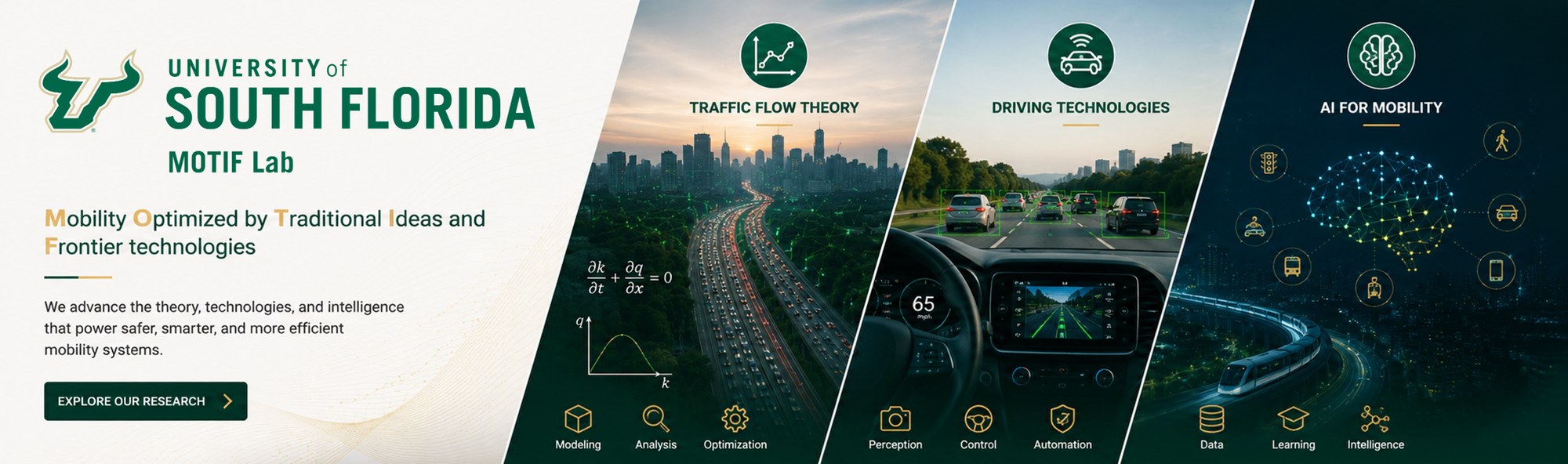
We improve mobility by combining traditional ideas, such as traffic flow theory and safety modeling, with frontier technologies, such as emerging driving technologies and AI.
Research themes
Traffic flow theory and operation
Macroscopic and microscopic models of how vehicles aggregate into flow, congestion, and breakdown, and how those models guide traffic operations.
Read more →Emerging vehicle technologies
How ADAS, lane-keeping assist, and electric powertrains change traffic efficiency and safety at the system level.
Read more →AI for mobility
Emerging AI, including language models, world models, and AI agents, applied to traffic operations, driving safety, and agency needs such as road damage inspection.
Read more →What sets MOTIF apart
A synergistic view. We integrate traffic flow theory with driving technologies and AI, because we believe technology guided by domain knowledge is the solution.
8traffic flow theory papers, from ACC string stability to EV bottleneck capacity
Theory that guides the technology
Car-following and string-stability theory shows how ACC and EVs change capacity and stop-and-go waves, and how to design controllers that damp those waves.
179Rvehicle models · 22P automakers in one release
Production vehicles, not a test rig
We record what cars people actually drive — stock lane keeping, cruise control and the moments drivers take back control — across the market, not on a single instrumented platform.
465Ppseudonymous drivers · 4,121P drives in DriveDNA
Real drivers on their own roads
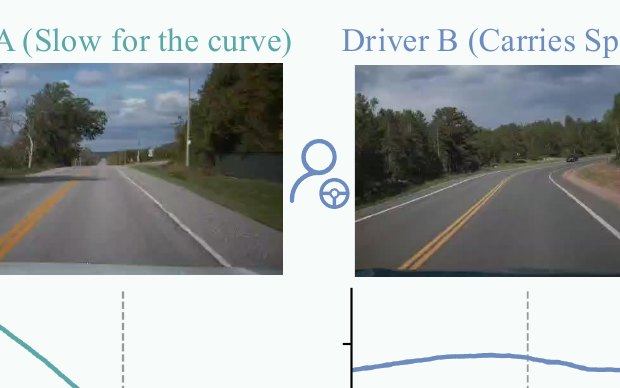
Naturalistic recordings from drivers' own cars — takeovers, driving style, whole-body motion — released with pseudonyms, blurring and skeleton-only cabin data.
177 msPp95 latency on a comma four · warnings at 5 HzP
From CAN bus to cockpit, in real time
Decoded, not guessed: verified CAN decoders, and models that run in the car — the same stack behind our open-source agency platform work with Florida DOT and Sarasota County.
- KDD 2027
- WACV 2027
- CoRL 2026
- CoRL 2026 Travel Award
- ITSC 2026
- TRB 2027
- TRB 2026
- ITSC 2025
- INFORMS 2025
Datasets & benchmarks
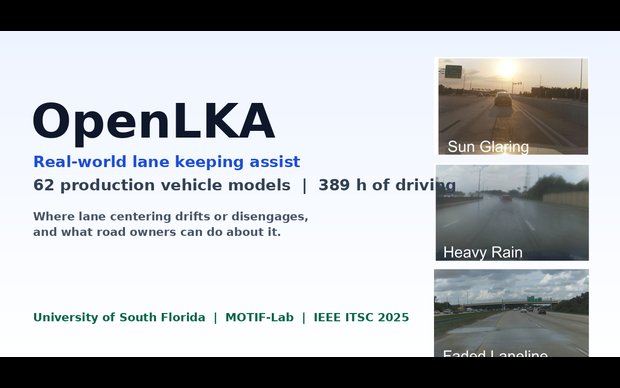
Open the hub →Six releases from one recording method — production cars, real drivers, decoded signals — each with an interactive page, access tier and citation.
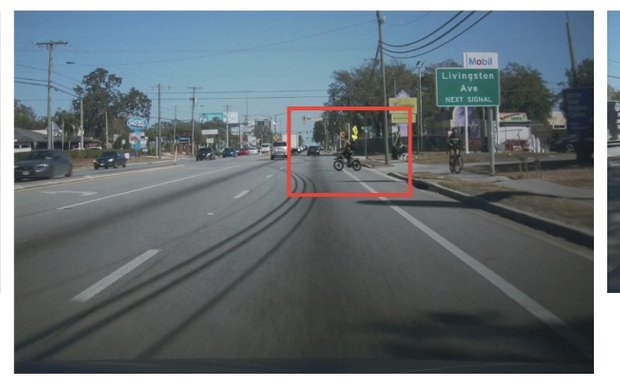
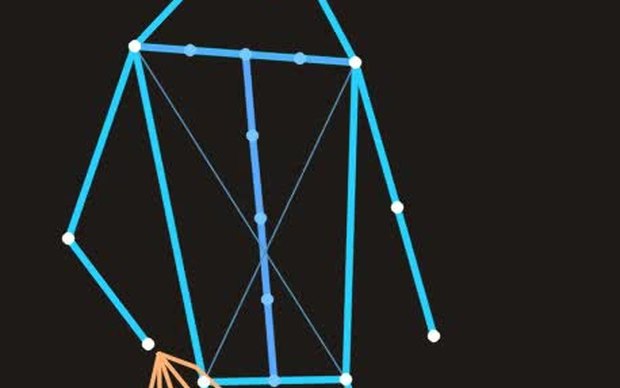
DriveMotion
Whole-body driver motion, forecast seconds ahead
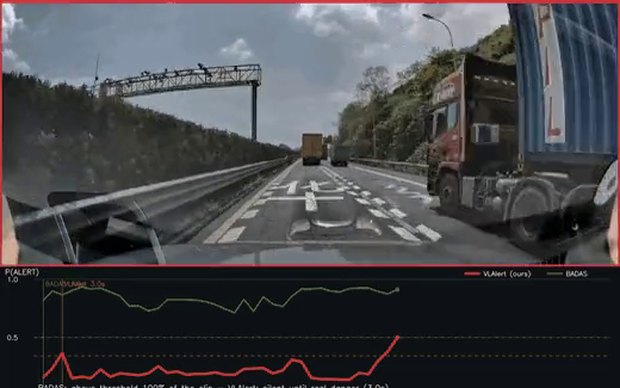
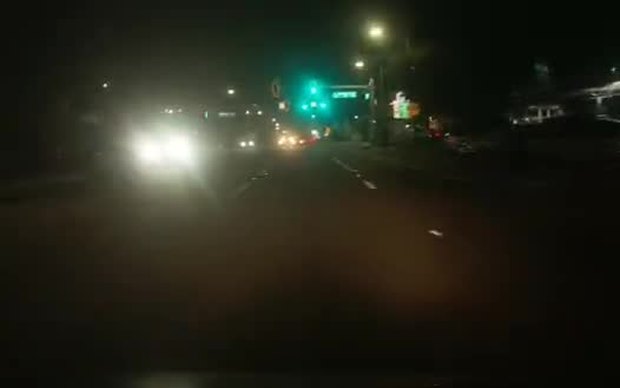
VLAlert-Bench
When should a driving system stay silent, observe, or alert?
Latest news
All news →DriveDNA and BATON accepted to ACM KDD 2027
Two of the lab's naturalistic-driving benchmarks — DriveDNA for driving-style identification and BATON for human–automation control transitions — will be presented at ACM KDD 2027 in San Jose, California (August 2027).
Alina Hagen's street-view accessibility paper accepted to WACV 2027
"Do VLMs See What Sensors Feel?" — an expert-guided design that scores wheelchair accessibility from Google Street View and checks it against GPS-derived wheelchair dwell behavior — will be presented at IEEE/CVF WACV 2027.
DriveMotion accepted to IEEE/CVF WACV 2027
Our large-scale, multi-source benchmark for driver motion sequence modeling and forecasting will be presented at WACV 2027 in Lake Buena Vista, Florida (January 2027).
Recent publications
- TriDrive: joint driver, vehicle, and road modeling for forecasting and driver monitoring
- DriveMotion: a large-scale multi-source benchmark for driver motion sequence modeling and forecasting WACV 2027
- Observe before you alert: adaptive driver alerting with vision–language models CoRL 2026 CoRL 2026 Travel Award
- Scale-CDA: a scalable prototype to democratize AI-assisted cooperative driving automation (CDA) for production cars
- DriveDNA: a large-scale multimodal naturalistic driving dataset and benchmark for driving style identification KDD 2027
Agencies & press
- Florida Department of Transportation and Sarasota County Transportation — field partners for the AI dashcam for post-hurricane road assessment.
- USF News, FOX 13 Tampa Bay and ABC7 Suncoast covered the dashcam work in August 2026 — read the coverage.
- Open-source for agency fleets: DoTPilot and Scale-CDA turn production cars into connected, AI-assisted platforms for under US $1,000 in parts.
- Talk to us: collaborations, data requests and student positions — [email protected].
Life at MOTIF
USF Tampa, the city we drive every day, and the experiments that put new vehicle technology through its paces. If this looks like a place you'd like to be, come join us.


